Zombusters
- 4.5
- Rating
- 500.00K
- Installs
- Free
- Price

 Analysis by App-foxy
I spent time with Zombusters as a mobile role-playing game built around survival and zombie-themed action. Its basic appeal is easy to understand: it aims to make short bursts of danger feel rewarding while adding enough character-building flavor to keep a run from feeling like a simple arcade session. I found it most interesting when I treated each attempt as a small decision-making exercise rather than rushing through every encounter.
The game is free to download, which makes it straightforward to try without committing money up front. It is listed for Teen players, and the audience response is encouraging, with a 4.5 average from around 45 thousand ratings. More than 500 thousand people have installed it, so it has already found a substantial mobile audience. Still, those numbers do not remove the need to ask whether its pace, visual presentation, and purchase structure fit the way you play.
My review focuses especially on that practical question. How comfortable is it to read and navigate? Does its survival-RPG format work for different gaming habits and physical situations? Where does it become tiring or difficult? I also looked at where it stands beside more traditional zombie games and mobile role-playing alternatives, because the right choice depends as much on your preferred rhythm as on the theme.
You May Also Like

 Blood Strike: 2.5 Anniversary
Blood Strike’s Loadouts Turn Every Drop Into a Tactical Gamble
A close look at Blood Strike’s custom loadouts: how fast access to signature weapons reshapes its battle royale rhythm, rewards preparation, and narrows the gap between fights.

 Pandora - Music & Podcasts
Pandora’s Music Is Easy to Start, but Harder to Recover
Pandora’s strength is its low-effort path from a seed to a station. Its weak spot is how much confidence it asks you to place in connection, setup, and quiet recovery.

 8 Ball Pool
 Is Built on Rivalries, Rematches, and Routine
A close look at the rivalries, rematches, shared routines, and unanswered safety questions that turn a quick pool match into a persistent mobile community.

 Samsung Music
’s Quiet Strength Is Playing What You Already Own
Its reach comes less from spectacle than from dependable access to a personal library. That simplicity is both the app’s strongest retention engine and its ceiling.

 AccuWeather: Weather Radar
AccuWeather Review: A Quick, Clear Forecast for Everyday Decisions
For everyday plans, the best forecast is the one you can understand quickly. AccuWeather makes rain timing, radar, and local conditions easy to act on, with a few trade-offs.

 Hill Climb Racing
Why Hill Climb Racing Still Turns Crashes Into One More Run
A tiny car, a bumpy hill and one more upgrade: Hill Climb Racing keeps resurfacing because its simple chaos makes every near-miss feel personal.
More From Our News Desk
View All News


How the game communicates its action and progression
I focus here on how Zombusters makes its survival action and role-playing progression legible while you play, because that balance shapes whether a run feels tense or merely confusing. I’ll also consider a practical way to approach each session: separate the immediate threat from the longer-term choice, then see how that habit affects the game’s appeal for different players.
Readability and navigation during a busy run
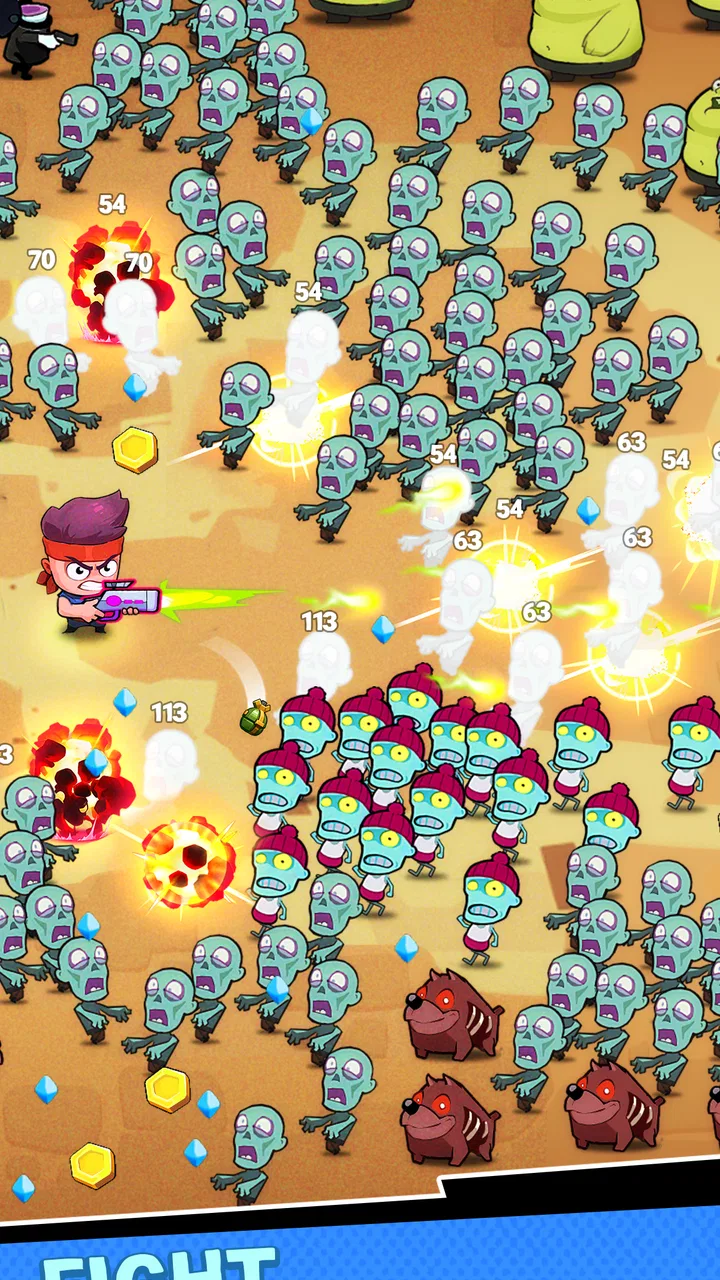
The central challenge in a survival game is not only defeating enemies. It is understanding what deserves attention first. Zombusters works best when I took a moment to read the situation before reacting. The combination of survival pressure and RPG elements encourages me to think about immediate danger while also considering how a choice might help later. That creates a useful layer between simple tapping and long-form character management.
For a player who enjoys clear goals and quick feedback, the format is approachable. You can enter with a simple objective—stay alive, deal with the threat in front of you, and improve your chances for what comes next—without needing to learn a large fictional universe first. That makes it easier to recommend for someone who wants a role-playing game that feels more immediate than a traditional story-heavy adventure.
Readability becomes more important once the screen gets busy. Zombie survival games naturally ask the player to track movement, threats, available actions, and progression at the same time. I found that the game is easier to follow when I avoid treating every visual element as equally important. My practical tip is to identify the most urgent threat first, then look for the next useful action rather than scanning the whole screen repeatedly. This reduces visual overload and makes the game feel less frantic.
Navigation is also easier when I play in short, deliberate sessions. Instead of starting while distracted and trying to make decisions during a conversation or commute, I get more from it when I can keep my attention on the display. The survival format may look casual, but the best decisions still depend on noticing changes quickly. Players who prefer a calm, menu-led RPG may find this more demanding than the store summary suggests.
Why the RPG layer matters
The role-playing elements give the game a reason to hold my attention beyond one encounter. A purely arcade-style zombie game can be satisfying for a few minutes, but progression adds a longer-term question: should I focus on surviving the present danger or make choices that improve future attempts? That tension is the most valuable part of the design for me.
I recommend approaching progression with a simple personal rule. If a choice helps you survive the next challenge consistently, it is usually more useful than chasing an attractive upgrade that only looks powerful in isolation. This is especially helpful for new players, because survival games can tempt you into spending resources too quickly. Learning to preserve options is more important than trying to make every run look impressive.
The game is not the best match for someone seeking a deep, dialogue-driven role-playing experience with extensive exploration and a carefully paced story. Its identity is closer to a survival game with RPG seasoning than to a traditional role-playing epic. That distinction matters. If you want character drama, complex party relationships, or a large world to explore at your own pace, a conventional RPG will probably suit you better.
Motor and sensory considerations
From a motor perspective, the main issue is the relationship between speed and accuracy. Survival gameplay can place pressure on quick reactions, and that may be uncomfortable for players with limited dexterity, tremor, fatigue, or difficulty making repeated precise touches. I would not describe the game as automatically inaccessible for those players, but I would approach it cautiously and test a short session before investing time or money.
A useful workaround is to play with the phone supported on a stable surface rather than holding it in one hand. That can reduce strain and make repeated interaction more controlled. I also prefer using a larger display when possible, because a little extra physical space can make small targets and crowded scenes easier to interpret. These are simple changes, but they can make the difference between an enjoyable run and an exhausting one.
Sensory comfort is just as important. Zombie-themed games may use sudden movement, strong contrast, or busy action to create urgency. Players who are sensitive to flashing visuals, rapid motion, or dense screens should begin with a brief session in a comfortable environment. Lowering the device brightness and taking breaks can help, although those steps are general phone habits rather than a substitute for built-in accessibility controls.
For players with hearing loss, the game’s usefulness depends on how much information is communicated visually during play. I would not rely on sound alone to understand an important situation. Keeping visual attention on the action is the safer approach, but that can increase the burden for someone who already finds fast-moving screens difficult to process. Players with sensory sensitivities should decide based on their own tolerance rather than assuming the zombie theme will be gentle.
Situational access in everyday use
Zombusters fits best into a quiet break at home, a waiting period, or a short session when I can give the screen my full attention. One realistic example is playing after dinner for a few minutes while sitting comfortably, using the time to complete a focused run instead of beginning a game that demands a long uninterrupted story chapter. The survival structure makes that kind of use more natural than a large console-style RPG.
It is a less suitable choice while walking, crossing a street, working, or traveling in a crowded vehicle. The need to notice threats and respond at the right moment means divided attention can lead to poor decisions. I would also avoid starting a difficult run when tired, because fatigue makes fast visual processing harder and can turn a manageable challenge into unnecessary frustration.
For younger players, the Teen rating is worth taking seriously. The game’s zombie subject matter may not be comfortable for every family, even if the player already enjoys role-playing games. Parents should consider the tone their child handles well and remember that free-to-play games can include optional purchases. The listed in-app purchase range runs from $0.29 to $299.99 per item, so I strongly recommend using device-level purchase protections before handing the phone to a child.
The game can also work for players who have limited time but still want progression. I like that the survival format gives each session a clear shape. However, short-session suitability should not be confused with low concentration. A five-minute run can still require more attention than a slower puzzle or turn-based game. If you need something that can be paused mentally at any moment, this may not be the right option.
Where the game still creates barriers
The biggest barrier is the pressure created by the survival format itself. Players who need extra time to read, plan, or make physical inputs may feel that the game is asking them to react before they are ready. That is not a flaw for everyone; urgency is part of the appeal. But it means the experience favors players who are comfortable processing several pieces of information quickly.
Another barrier is the free-to-play structure. Downloading the game costs nothing, which is helpful for trying it, but optional purchases can complicate the experience for anyone who wants a completely controlled budget. I would begin without buying anything and pay attention to whether normal progression remains enjoyable. If the game starts making you feel that spending is necessary to keep up, that is a good point to step back rather than treating a purchase as the automatic solution.
There is also a difference between visual simplicity and cognitive simplicity. A game can present a small number of buttons while still asking the player to track threats, timing, and progression. Zombusters is easier to enjoy when I accept that I may need a few attempts to understand its rhythm. Players looking for instant mastery may become impatient, while players who enjoy learning through repetition are more likely to appreciate it.
Device compatibility is another practical consideration. The minimum operating system is Android 7.1, and the current version is 3.3.0. That makes the game available to a broad range of Android devices, but operating-system compatibility alone does not guarantee that every screen size or hardware setup will feel equally comfortable. A player using an older or smaller phone should test the interface before making any in-app purchase.
How it compares with familiar alternatives
Compared with a conventional turn-based RPG, Zombusters offers more immediate pressure and less time to study each decision. That makes it a better choice for players who want action inside their role-playing progression. A turn-based alternative is preferable if you need generous planning time, dislike frantic scenes, or want to play comfortably while managing limited dexterity.
Compared with a pure endless-survival game, the RPG layer gives the experience more purpose. You are not only trying to last longer in the moment; you are also encouraged to think about improvement across attempts. That added structure is the reason I would choose it over a basic score-chasing game when I want a stronger sense of development.
Compared with a large, story-focused zombie adventure, it is more convenient but less immersive. You can get into the action without committing to a long narrative session, yet you should not expect the same depth of exploration or character storytelling. The trade-off is clear: you gain quick survival-focused play, but you give up the spacious pacing of a full-scale RPG.
Who should try it, and who should skip it
I would recommend the game to someone who likes zombies, enjoys improving through repeated attempts, and wants role-playing elements without starting a huge campaign. It is also a sensible trial for players who prefer mobile games that can be played in compact sessions, provided they are comfortable giving the screen focused attention.
I would skip it if you want a relaxing game that never asks for quick reactions, or if you find crowded action scenes tiring. I would also look elsewhere if your priority is a deep story, extensive exploration, or a completely purchase-free experience. The free entry point is attractive, but the wide range of optional item prices means budget-conscious players should set boundaries before playing.
For players with accessibility needs, my advice is practical rather than absolute: try the game in a controlled setting, support the device, use a larger screen if available, and stop when visual or hand fatigue begins. The experience may work well for some people with limited stamina when played in brief sessions, while the same survival pressure may be a serious obstacle for others. That variation is important, and no single recommendation can replace personal testing.
My inclusive verdict after playing
Zombusters succeeds when its survival pressure and RPG progression complement each other. I enjoyed the feeling that each run could teach me something, especially when I stopped chasing immediate rewards and started thinking about preserving options. The zombie setting gives the action a clear identity, while the role-playing layer helps it avoid feeling like a disposable reflex game.
Its inclusive appeal is more limited. The game can fit different schedules and may be manageable for players who adjust their setup, but fast visual decision-making remains a meaningful barrier. I also would not recommend it as a background game for multitasking. It rewards attention, and that requirement can be tiring for people with sensory, motor, or concentration limitations.
Developed by voilà!, the game is available free of charge and carries a Teen content rating. Its 4.5 average and roughly half-million-plus installs show that it has attracted plenty of interest, but my recommendation is more specific: try it if you want compact zombie survival with an RPG edge, not if you are searching for a slow, fully accessible-by-default role-playing adventure.
My final advice is to play without spending during the first few sessions. Learn how the action feels on your device, check whether the visual pace is comfortable, and decide whether the progression keeps you interested. If those basics work for you, the game has enough survival tension to become a dependable short-session pastime. If they do not, a slower turn-based RPG or a less visually demanding alternative will be a better and kinder choice.
FAQs for Zombusters
01What is Zombusters and what is the main objective of the game?
Zombusters is an action-packed mobile game available on Android and iOS platforms. The main objective is to survive waves of zombies using a variety of weapons and strategies. Players must navigate through challenging levels, defeat zombie bosses, and complete missions to progress. It's a thrilling blend of strategy and action that keeps players engaged.
02Are there in-app purchases in Zombusters, and are they necessary to enjoy the game?
Yes, Zombusters offers in-app purchases that allow players to buy weapons, upgrades, and other items. However, these purchases are not necessary to enjoy the game. Players can progress through skillful gameplay and strategy. While purchases can enhance the experience, they are entirely optional and not required to complete the game.
03What are the minimum device requirements to play Zombusters?
To play Zombusters smoothly, players need a device running Android 5.0 or iOS 10.0 and above. The game requires approximately 200 MB of storage space, and a mid-range device with at least 2GB of RAM is recommended for optimal performance. Ensure your device meets these requirements for the best experience.
04Does Zombusters offer multiplayer or co-op modes?
Currently, Zombusters focuses on a single-player experience, allowing players to immerse themselves in the storyline and gameplay. While it does not feature multiplayer or co-op modes, it offers leaderboards and achievements to compete with friends and global players. The developers are considering future updates that may include multiplayer features.
05How often does Zombusters receive updates and new content?
Zombusters receives regular updates that include bug fixes, performance improvements, and new content. Updates typically occur every few months, and the developers are committed to enhancing the game with new levels, weapons, and challenges. Players can look forward to fresh content and improved gameplay with each update.
Pros
- Engaging gameplay with strategic elements.
- Vibrant graphics and smooth animations.
- Regular updates with new levels and challenges.
- Intuitive controls for easy navigation.
- Multiplayer mode enhances replayability.
Cons
- In-app purchases can be expensive.
- Some levels require internet connection.
- Occasional ads interrupt gameplay.
- Limited character customization options.
- Battery drains quickly during extended play.

Zombusters
Gallery